
CLIENT: Chuck Giroux, Giroux Technologies. Charleston, SC
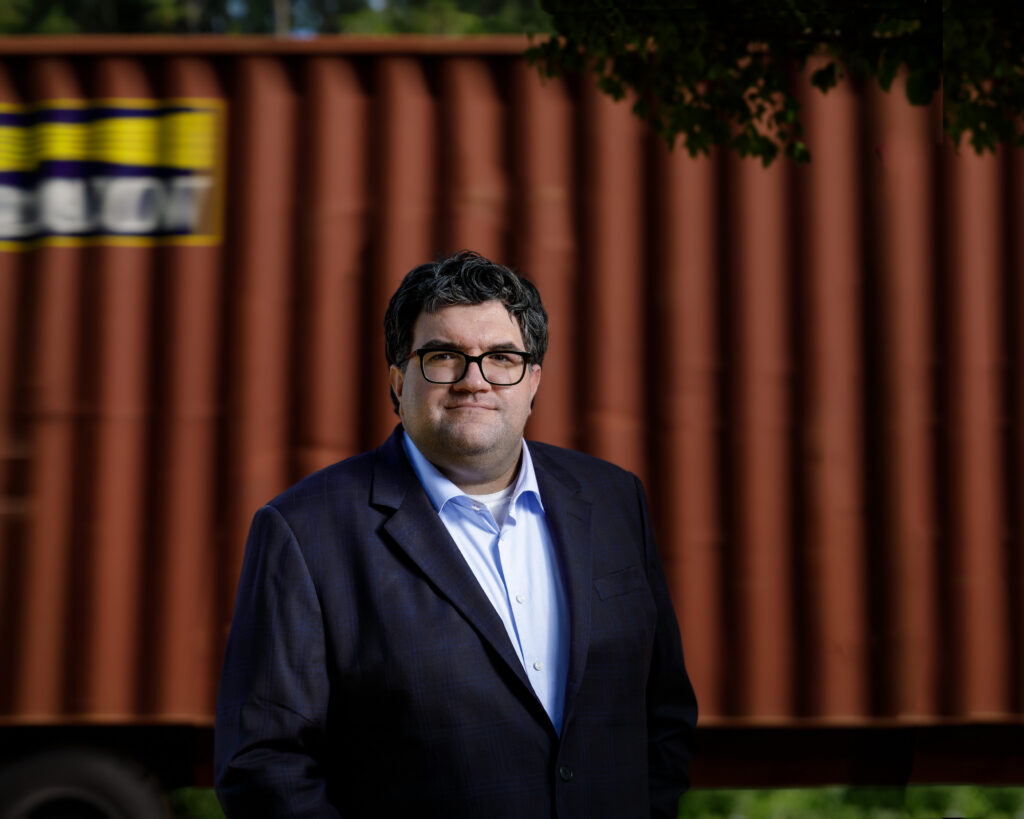
Chuck Giroux came to me looking for an executive headshot. What I gave him was a visual foundation that could do something a headshot can’t.
The Problem
Chuck is a fractional COO and Chief of Staff. He started out in tech in the Boston area, then went to work for his family’s logistics company in the plastics industry, helped build and scale it, and sold it a few years ago. He earned his MBA from Babson after that. He is a tech-minded operator who is quick to tell you he is not a software guy. His line is no technology for technology’s sake. His value is not a platform. It is that he has actually run the kind of business his clients run.
Now he is building Giroux Technologies from the ground up, working with a marketing partner on his LinkedIn presence and putting his visual foundation in place before the conversations start. He steps into founder-led companies in logistics, construction, and field services, the kind of businesses where things move, get built, and run on real process. Most of his clients are so buried in the day-to-day that they cannot step back and work on the business, and many have never heard the term fractional COO. Chuck has to create recognition before a conversation can even start.
That puts unusual weight on his imagery. A prospect who has never met him forms a judgment from a profile photo before reading a word, and what that photo has to do is hard. Chuck wants to read as trustworthy first and competent second, and he is careful about the line. Too buttoned up and he becomes the polished outsider his audience keeps at arm’s length. His clients dress in flannel, polos, and khakis, not suits. He needed to look like someone who belongs in that world without pretending to be something he is not.

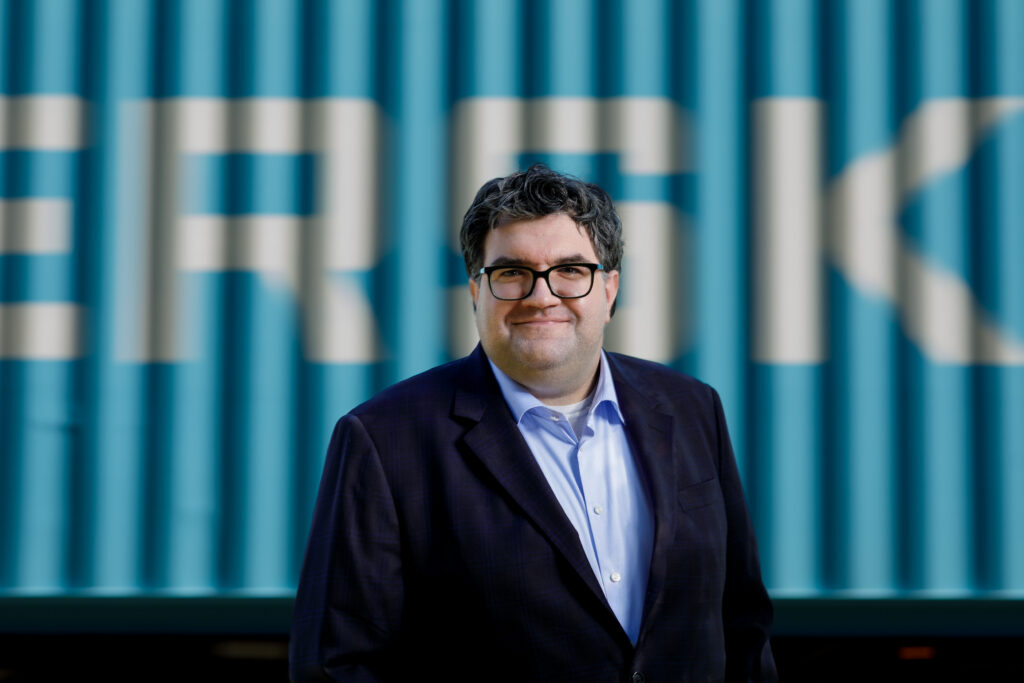
“I came into the shoot skeptical but open. I’d found previously that I don’t photograph well, so I was concerned the results would end up the same. That passed quickly. It was clear from the first location that Kip had a vision and a plan.” – Chuck Giroux, Giroux Technologies
Why One Headshot Was Not the Answer
He came in for the headshot. The honest read was that a single image could not carry the load. One portrait can establish that someone looks professional, it cannot tell a skeptical owner-operator that this person has run a business like theirs and will show up when it matters. So, instead of a headshot, we built four looks, each one designed for a specific digital space and what it needed to do there.
The Four Looks and the Work Each One Does
The first impression. This is the visual handshake, the LinkedIn primary and the About-page anchor, and it had to pull double duty as both a hero image and a usable headshot. So it does more than introduce him. We set up beside the road by the Wando terminal, with container trucks running behind him at speed, freight just off the ships and headed inland. The motion blur isn’t decorative. It’s momentum. The logistics operations that shaped his career become the backdrop he stands against, putting his past and his forward trajectory in the same frame. It reads as a working operator rather than a posed executive, and it stops a scroll the way a clean studio headshot never would.


The proof. This is what a prospect looks for once they are interested and start asking whether he has really done this, and it’s where the shoot got interesting. Chuck sold his company, so he no longer has an operation of his own to be photographed in, and his consulting work happens inside clients’ private spaces where a camera does not belong. So we built the environment. Working from a single location, we staged settings that read as an office and a working space, lighting and framing each one so it holds up as a real working context. The result puts him convincingly in his element without borrowing anyone else’s floor.


The details. Beyond the wider shots, we pulled in close on the tools of the work itself: hands on the keyboard, a spreadsheet open on screen, a notebook from his Babson days nearby. These fill in the gaps the bigger shots can’t. They say this person knows the tools and is ready to get the job done, without saying a word about it directly.


The person behind the professional. People hire people, not resumes. This is the quieter answer to a quieter question: is this someone genuine, someone trustworthy, someone I’d want in my corner. It gives his audience permission to like him before they have met him, and it gives his future clients a glimpse of what working with him will actually feel like. Notebook in hand, reading a room, thinking through next steps.


Directing Someone Who Does Not Love the Camera
Chuck describes himself as not naturally social, fully engaged once he is in a real conversation but not someone who performs. That is true of most executives, and it is the part of this work that matters most. The job was not to make him pose. It was to build settings where he could settle in and let the real version of him come through. Wardrobe followed the same logic. A blue Oxford and navy blazer, no tie, relaxed but pulled together, close enough to how his clients dress that he reads as one of them.
This is what an editorial approach does for commercial work. The goal is not a perfect image. It is a true one. For an audience that reads polish as distance, true is what closes the gap.
The Outcome
One session, four looks, a full suite of images built to set him up to succeed across every platform he shows up on. Across his LinkedIn, his website, and the supporting content his marketing partner is building, ready before the conversations he is working to start. It was not priced per image. It was a set of assets designed to work together and keep working as his practice ramps.
If your current imagery does not match where your business is headed, that is worth a conversation before your next launch or campaign.


Share Post: