

Client: Josh Ferguson, Design Executive, JFerguson Creative. Charleston, SC
Letting Go of the Wheel
Josh is a design executive and the founder of JFerguson Creative, with ten-plus years leading user experience and design work across industries. He was referred by Victor Bejar, a Charleston UX/CX executive and a past client of mine. Josh needed new marketing and personal brand images, something built for his website and his professional presence that matched his level of experience and was distinct enough to actually look like him, not like a template.
Here’s the part that’s easy to miss: Josh’s entire career runs on visual judgment. He evaluates other people’s creative work for a living. The reasonable assumption walking into a shoot like this is that he’d have an opinion about every frame. He didn’t. On the call before we ever picked a date, he told me he trusted my read on it and would rely on my direction during the shoot.


“Kip made the entire process easy and comfortable, and the final images exceeded my expectations. I wanted photos that felt authentic while still looking polished and professional, and he nailed it. They’ve become a key part of my online presence and have helped me present myself with confidence to clients, recruiters, and employers.”
Josh Ferguson, Design Executive
The Brief Was Already in the House
Instead of building a concept from nothing, we started with his house. I asked Josh to send wide photos of his home in West Ashley and tell me which rooms he actually lived in, and why. Three places told most of the story: the outdoor deck, a home office where he keeps the bass guitar he plays alongside his computer desk and the bookcase full of what he actually reads, and a moody accent wall designed as the first impression when entering his home. The job wasn’t inventing a studio concept, it was picking the right three vignettes out of a house that already had a point of view.
Three Locations, Six Looks
The Conversation. A shot of Josh leaning in, heavy bokeh pulling every bit of attention onto Josh’s face. Built to feel less like a photograph and more like a conversation, the version of Josh listening to a client and already thinking through what he’d build for them.

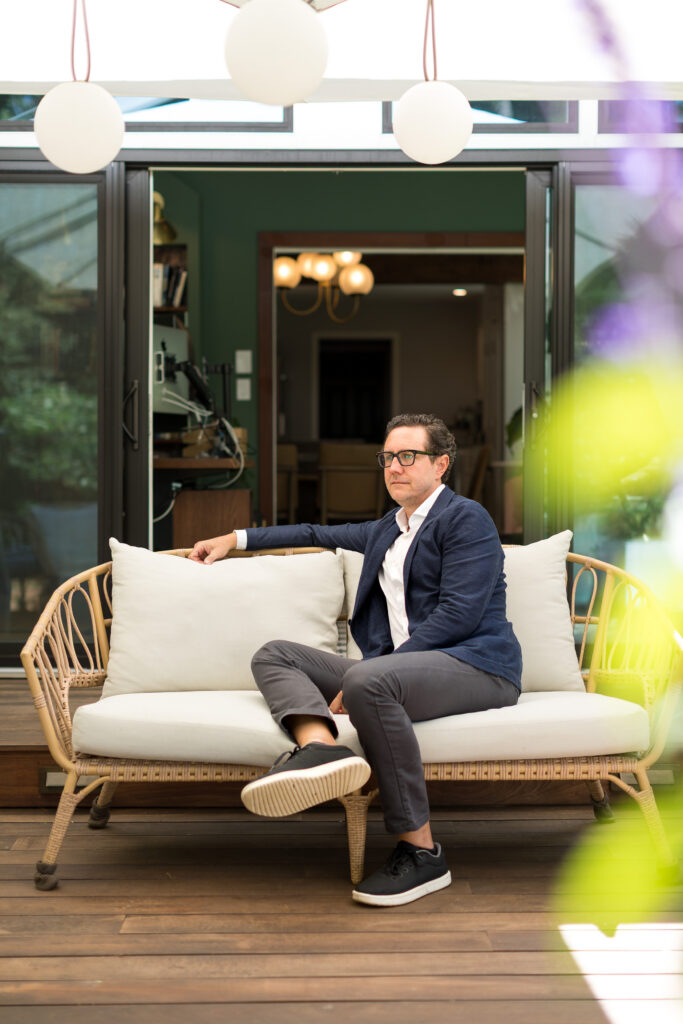
The Deck. A wider shot on his outdoor couch, framed so the sliding doors behind him open into the home office, then through subsequent rooms, each doorway stacking behind the last. The depth isn’t an accident, it’s a vanishing point built directly behind him, standing in for the layered thinking a design leader actually does.

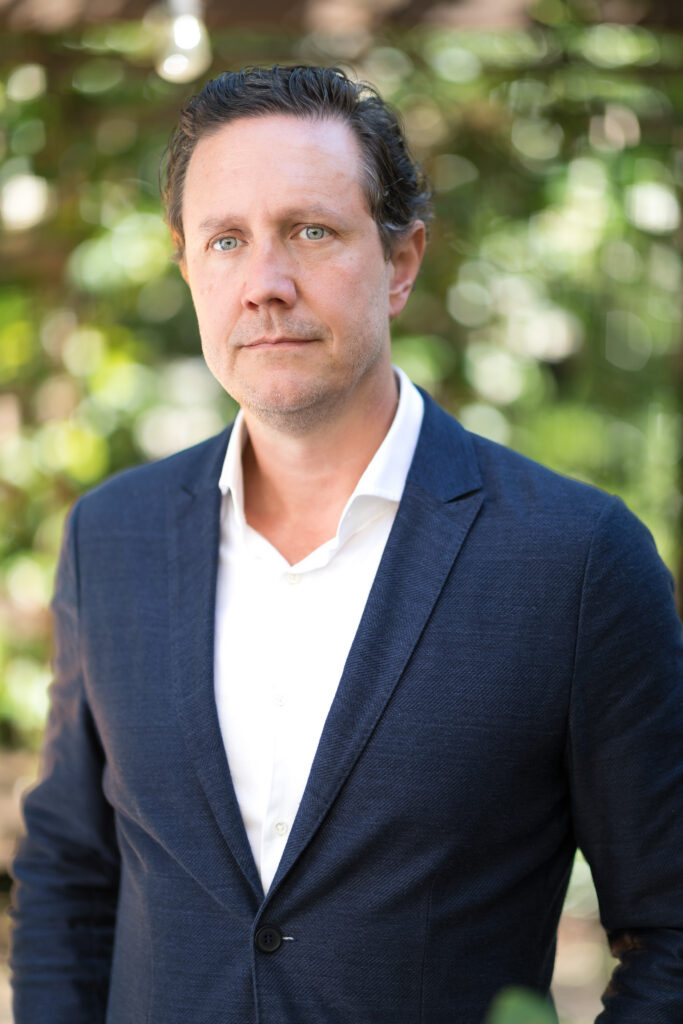
The Clean Headshot. Glasses off, heavy bokeh again, but built for a different job this time: one corporate-ready register with a smile, one more contemplative three-quarter. This is the version made specifically for the placements that need something simple and dependable, a bio page, a directory, a formal introduction.

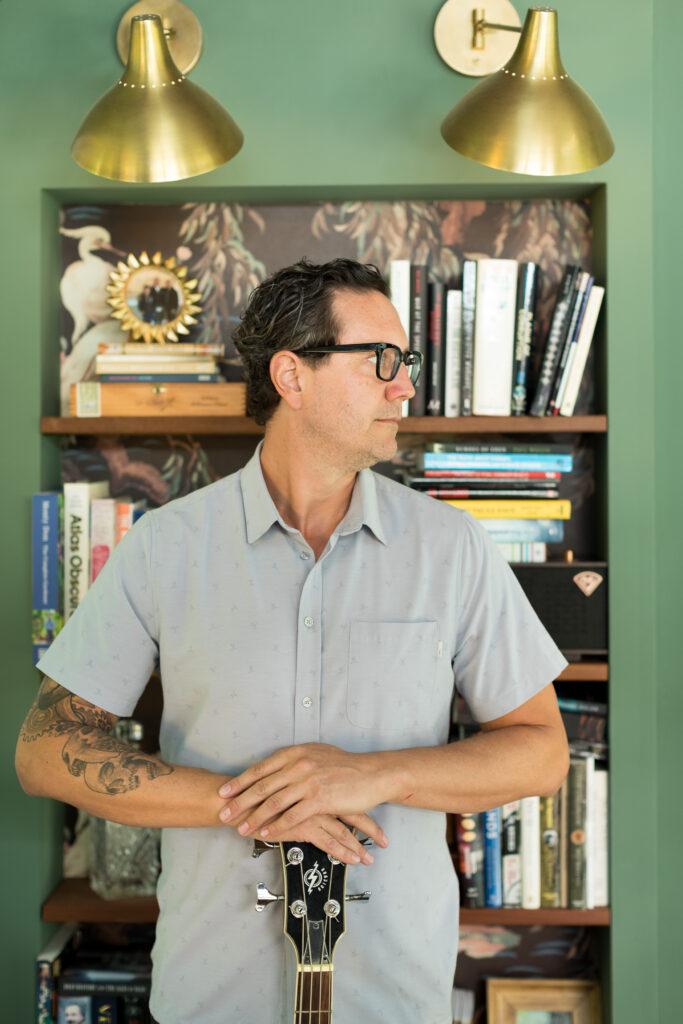
The Bookcase. Standing in front of the shelves that hold what he actually reads. Josh pointed out which books on that shelf still feed his thinking, and the frame is built around that idea, that you can read someone by what they keep close. Multiple expressions here: smiling, looking off toward something, holding his guitar while working through a thought.

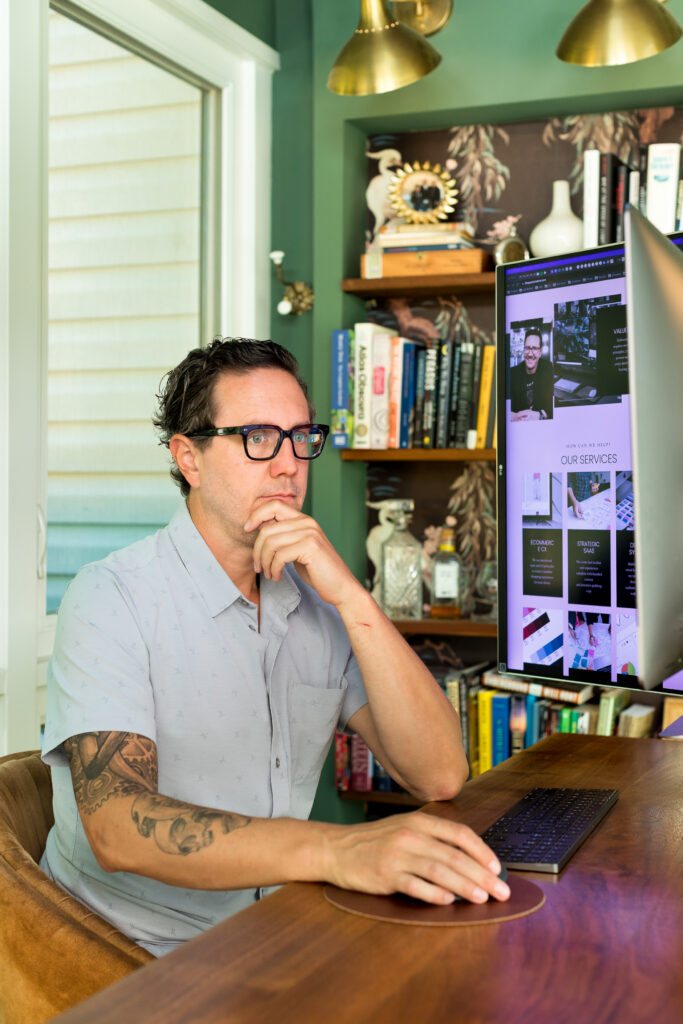
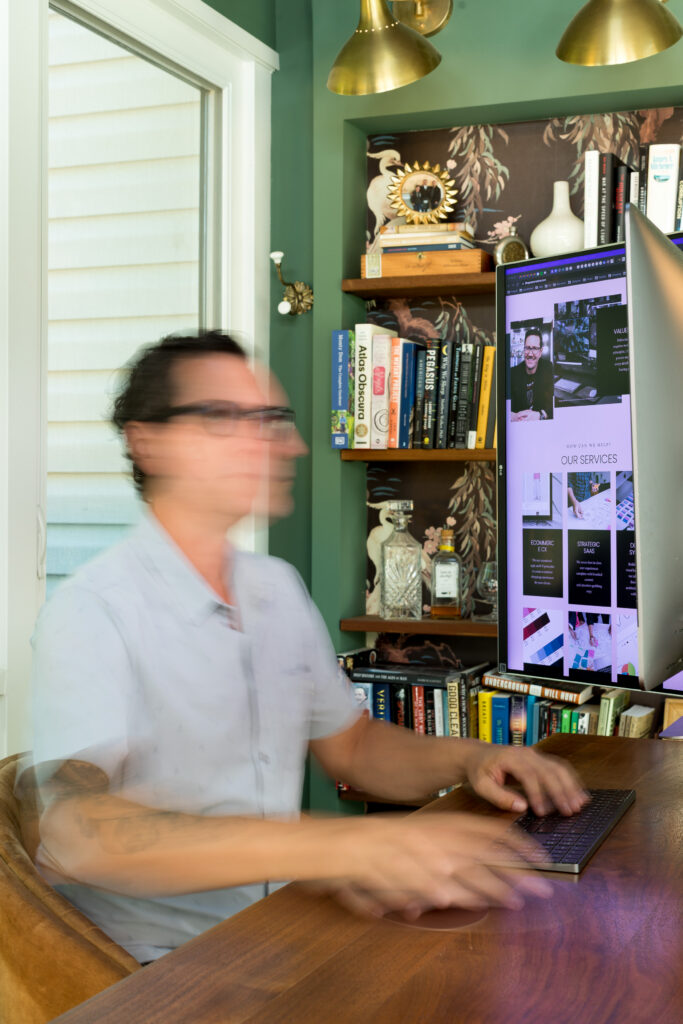
The Office in Motion. Two images at his desk, two oversized monitors in frame. One is sharp, Josh actually working. The other is an intentional long exposure, blurred on purpose, so the set includes motion instead of only stillness, a design leader caught in the middle of doing the work instead of posing next to it.

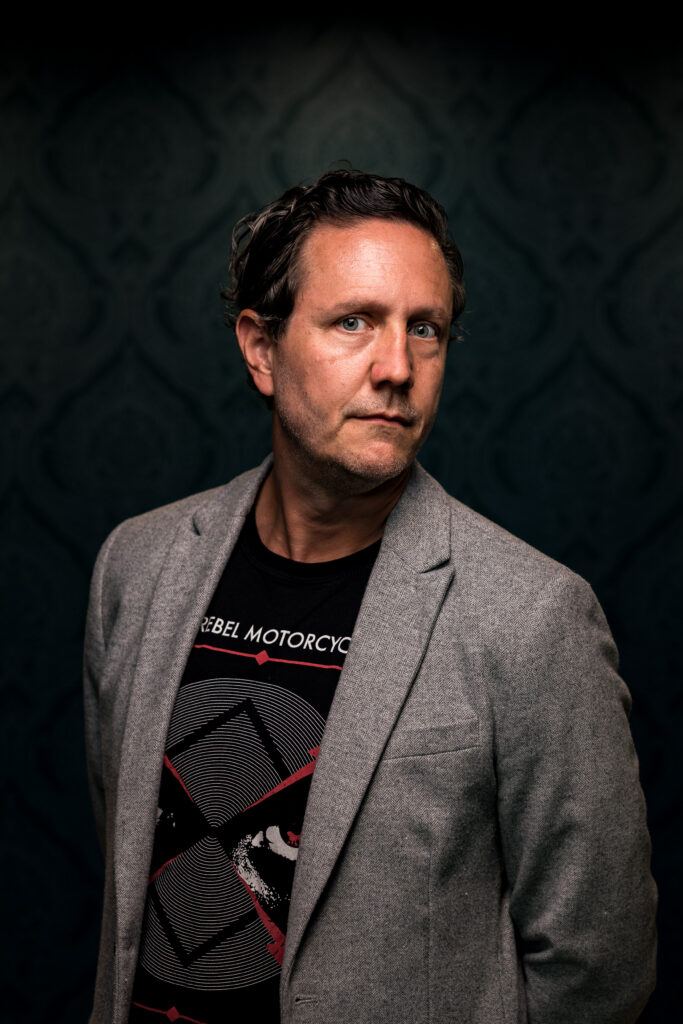
The Wall. Shot against the moodily lit accent wall built to make a strong first impression the moment someone walks into the house, in a tailored blazer over a band t-shirt from music he actually listens to. It’s a fitting backdrop for a frame doing the same job for his brand: lighting built to carry depth and drama on purpose, the most composed frame in the library, and the one that holds both halves of him at once, the executive in the jacket and the person underneath it.

Trusting Someone Else’s Eye
It would be reasonable to expect a design executive to have opinions about every frame. Instead, as I walked Josh through the thinking behind each setup, he kept coming back to the same line: “I’ve seen your work, I trust your vision.” He wasn’t hands-off about it, he was engaged the whole time, asking questions, appreciating the specific reasoning behind each shot, and then giving me his sign-off to run with it. That trust wasn’t blind, it was informed: someone who evaluates visual work for a living can tell within the first few frames whether the person behind the camera has a plan, and once he saw the plan working, he kept signing off on it instead of stepping in to redirect it.
Some of that plan is visible if you know where to look. The deck shots use a heavy, deliberate bokeh to keep every ounce of attention on his face. The couch shot behind him was framed to build a vanishing point through three stacked doorways on purpose, not by accident. The long exposure at the desk is blurred on purpose, so the set includes motion instead of only stillness. Explaining that kind of decision is exactly what earned the sign-off, a design leader recognizes an intentional choice the moment he sees one.
Being in his own home did real work here too. Josh wasn’t performing for a strange room, he was standing next to his own guitar, his own books, and his own patio furniture. The wardrobe changed with the location, the navy cardigan across the deck looks, the short-sleeve shirt at the bookcase and the desk, the tailored blazer over a band t-shirt against the wall, but none of it read as costume. Even the wall look, the most polished frame in the set, was still built around a shirt he’d actually wear, just with a jacket over it.
What Three Locations Add Up To
Josh left with a library that covers the full range a design leader actually needs: a conversational close-up and a wider environmental shot from the deck, a clean corporate headshot built for formal use, proof of craft at the bookcase and the desk, including motion instead of just stillness, and one high-authority editorial frame against an intentional accent wall.
If your photos don’t look like they could only be you, that is worth a conversation.


Share Post: